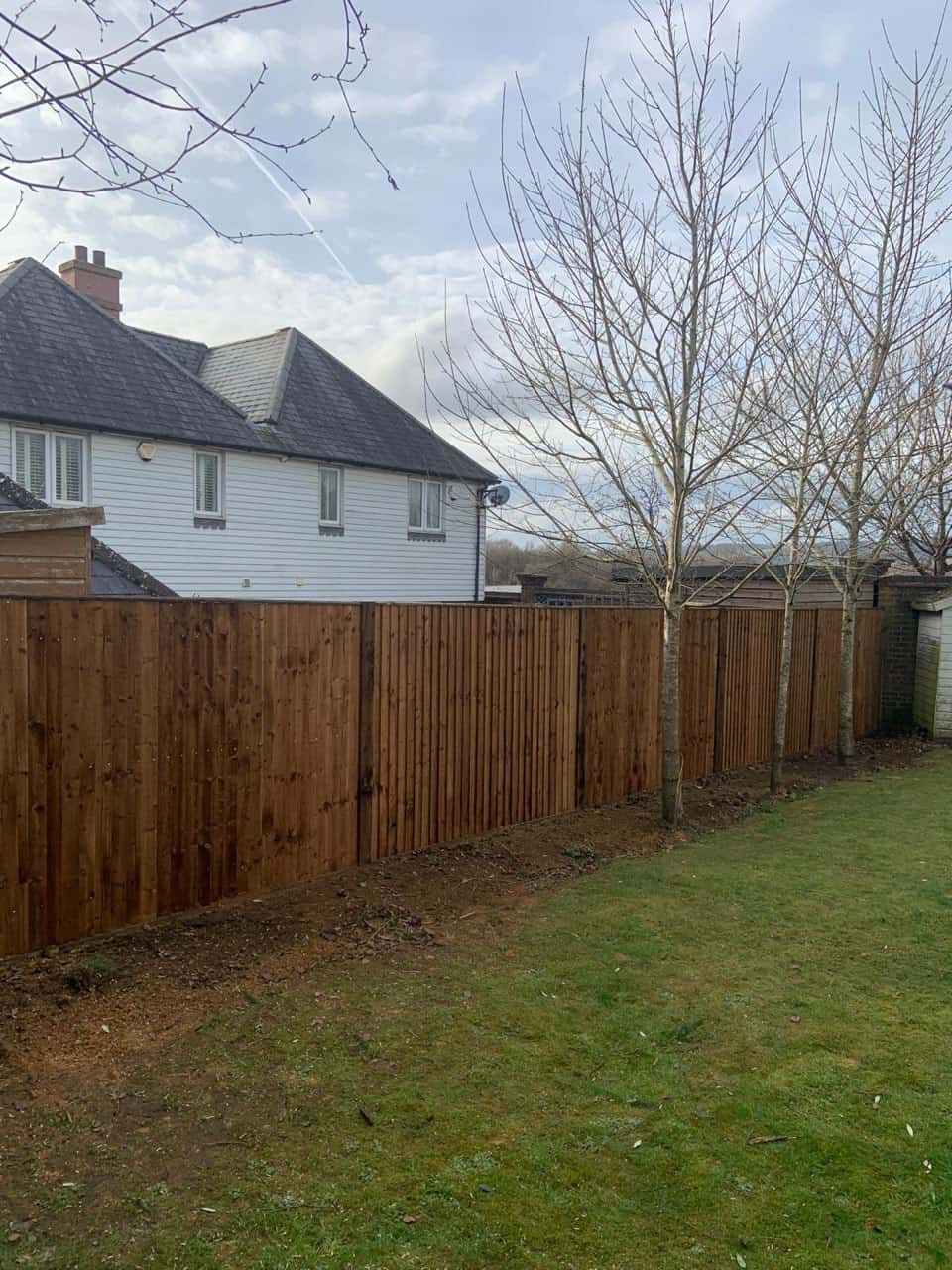
How to Deal with a Fence That Has Started Bowing
A fence that has started bowing or leaning out of alignment is more than an appearance issue. Movement can indicate that posts, panels, rails or fixings are no longer providing the support they once did. If the cause is left unresolved, a relatively small amount of movement can gradually place additional strain on neighbouring sections and lead to more extensive damage.
For homeowners in Oxted, Surrey, the right way to deal with a bowing fence depends on why the movement has occurred and how much of the structure has been affected. In many situations, professional fence repairs can restore stability without replacing the entire fence. The important step is identifying the underlying weakness rather than simply attempting to push the fence back into position.
Why Do Fences Start Bowing?
Fencing is continuously exposed to wind, rainfall, changing ground conditions and natural deterioration. Over time, these factors can affect different components of the structure.
Common causes of bowing include:
- Loose or deteriorating fence posts
- Movement around post foundations
- Damaged or weakened rails
- Distorted fence panels
- Loose fixings
- Prolonged moisture exposure
- Pressure from climbing plants or vegetation
- Strong winds
- Uneven ground movement
- Several ageing components working less effectively together
The visible bow may therefore be the symptom rather than the actual cause.
Start by Checking the Fence Posts
Fence posts provide the primary structural support for most fencing systems. When a fence begins leaning or bowing, they are one of the first components worth assessing.
A post may look reasonably straight while having movement around its base. Alternatively, deterioration may have weakened the post sufficiently that it can no longer hold the adjoining sections securely.
Look for signs such as:
- Movement when the fence is under light pressure
- Posts leaning away from their original position
- Visible deterioration close to ground level
- Cracking or splitting
- Changes around the base of the post
- Several adjoining panels moving together
Where the post itself is the problem, simply straightening the panel will not provide a lasting solution.
Could the Fence Panel Be Causing the Bow?
Sometimes the posts remain relatively secure while the panel between them has become distorted.
Timber can change over time as it is repeatedly exposed to moisture and drying conditions. Individual boards or complete panels may begin to warp, creating a bowed appearance even though the main supports remain stable.
The panel should be assessed to determine whether it can be secured or repaired effectively.
If the distortion has become severe, replacing the affected panel may provide a more appropriate result while allowing the surrounding fence to remain in place.
Damaged Rails Can Allow a Fence to Lose Its Shape
Rails help connect and support different parts of a fence.
When a rail cracks, deteriorates or becomes detached, boards can begin moving independently rather than remaining properly supported. This can cause sections of the fence to bow or become uneven.
Because rails are not always immediately visible from every angle, the problem can initially appear to be with the fence panel itself.
Repairing or replacing the affected support may restore the section without requiring wider replacement.
Why Wind Can Cause Progressive Fence Movement
Fences naturally experience considerable wind pressure because they present a large surface area.
A well-installed fence transfers these forces through its panels, rails, posts and foundations. When one of these components becomes weak, windy conditions can exaggerate the problem.
A slightly loose post may move further. A damaged rail can place additional stress on nearby fixings. A panel that has started separating from its support may become increasingly unstable.
This is why a fence that only appears slightly bowed after difficult weather is worth checking before further movement occurs.
Check Whether Several Sections Are Moving
The extent of the bowing provides useful information.
If only one panel is affected, the problem may be localised. A damaged rail, loose fixing or individual post could be responsible.
If several panels are leaning in the same direction, the issue may involve multiple posts or a broader section of the fence.
Look along the fence line from a safe position. Changes in alignment can make it easier to see whether the problem is confined to one area or extends much further.
This helps determine whether targeted repairs are likely to be sufficient.
Can Overgrown Vegetation Make a Fence Bow?
Yes. Dense vegetation can place considerable pressure on fencing.
Climbing plants can become surprisingly heavy, particularly when wet. Shrubs and branches can also push against panels and gradually move them out of alignment.
Vegetation may additionally restrict airflow around timber, allowing damp conditions to persist for longer.
Where plant growth has contributed to the problem, repairing the fence without addressing the pressure against it may result in the same movement returning.
The fence and surrounding vegetation should therefore be considered together.
Ground Movement Can Affect Fence Alignment
Not every bowing fence has a problem above ground.
Changes around post foundations can allow sections to move even when the visible timber remains in reasonable condition.
Persistent wet conditions, disturbed ground or gradual movement can affect how securely individual posts are supported.
If a post has moved because its foundation is no longer providing adequate stability, attention needs to be given to the support rather than simply forcing the post upright.
Professional assessment can identify whether the post itself is damaged or whether the issue lies around its base.
Should You Try to Straighten a Bowing Fence Yourself?
A slightly uneven panel may appear easy to push back into position, but straightening the visible section without identifying the cause can be temporary.
If a post is loose, the fence may simply move again.
If a rail is broken, forcing the panel back could place additional pressure on the remaining fixings.
Before attempting any correction, the structural components responsible for supporting the affected section should be considered.
Professional fence repair is particularly useful when several sections are moving or the cause cannot be identified clearly.
When Can a Bowing Fence Be Repaired?
A bowing fence does not automatically require complete replacement.
Targeted repairs can often be appropriate when deterioration is limited to particular components.
Depending on the condition of the fence, work may involve:
Repairing or replacing damaged posts
Where individual posts have failed but surrounding sections remain serviceable, attention can be concentrated on restoring their support.
Replacing damaged panels
A distorted or deteriorated panel can sometimes be replaced while retaining sound posts and neighbouring sections.
Repairing rails
Failed support rails may be responsible for movement even when the main panels remain usable.
Securing loose components
Fixings and connections can be assessed where movement has developed between otherwise serviceable parts.
The correct approach depends on what has caused the fence to lose alignment.
When Might Wider Fence Replacement Be More Appropriate?
Repairs are most useful when the surrounding structure remains in reasonable condition.
If bowing is occurring across a large proportion of an ageing fence, replacing individual components repeatedly may not address its overall decline.
Signs that deserve a broader assessment include:
- Several posts deteriorating simultaneously
- Widespread panel distortion
- Multiple damaged rails
- Frequent new repair requirements
- Significant movement along much of the fence line
- Extensive timber deterioration
In these circumstances, it is worth considering the complete condition of the fencing rather than focusing solely on the most visibly bowed section.
Why Early Fence Repairs Matter
A small amount of movement can increase strain elsewhere.
For example, a leaning post can pull an adjoining panel out of position. That panel can then place additional pressure on the next post or fixing.
What begins as one weak component can gradually affect several sections.
Early repairs can interrupt this progression by restoring support before the movement spreads further along the fence.
This is particularly worthwhile after strong winds or when a change in alignment has appeared relatively suddenly.
Do Not Ignore a Fence That Keeps Moving
A fence that has been pushed upright but repeatedly returns to a bowed position is providing a useful clue.
Something is failing to support it correctly.
Repeated movement can indicate a loose foundation, deteriorating post, damaged rail or another unresolved weakness.
Rather than continuing to reposition the visible section, identifying the cause provides a better basis for a lasting repair.
Why Professional Fence Assessment Adds Value
Professional fencing repairs begin by establishing which components remain serviceable and which are responsible for the movement.
At Fast Fix Fencing Oxted, we provide professional fencing and fence repair services throughout Oxted, Surrey. When assessing a bowing fence, the aim is to determine whether the problem is confined to an individual post, panel or rail, or whether a larger section has deteriorated.
Where targeted repairs are suitable, sound sections of the existing fence can remain in place. Where deterioration is more extensive, the appropriate solution can be considered based on the condition of the complete fence line.
How Can You Help Prevent the Problem Returning?
Once repairs have been completed, keeping an eye on the fence can help identify new movement early.
It is useful to:
- Check fence alignment after periods of strong wind
- Prevent heavy vegetation from placing pressure on panels
- Look for deterioration around the bases of timber posts
- Address loose panels or fixings promptly
- Check for damaged rails when sections begin moving
- Avoid allowing small alignment problems to worsen unnoticed
Routine observation does not need to be complicated. Simply noticing changes early can make fence maintenance considerably more manageable.
Conclusion
A bowing fence should not simply be pushed back into position without first identifying why it has moved. Loose posts, deteriorating foundations, damaged rails, warped panels, vegetation and weather exposure can all contribute to the problem.
Where the damage is localised, professional fence repairs can often restore stability without replacing the entire fence. The key is addressing the component responsible for the movement before additional sections are placed under unnecessary strain.
For homeowners in Oxted, Surrey, Fast Fix Fencing Oxted provides professional fencing and fence repair services. If your fence has started bowing, leaning or moving out of alignment, contact us to arrange an assessment and determine the most suitable way to restore a secure and well-aligned fence..
Call us on: 01883 770 894
Click here to find out more about Fast Fix Fencing Oxted
Click here to complete our contact form and see how we can help with your fencing needs.